Purpose-specific triggers graduate from Labs to become the default, alongside a rebuilt Activity timeline and one-tap Update all for batch firmware.
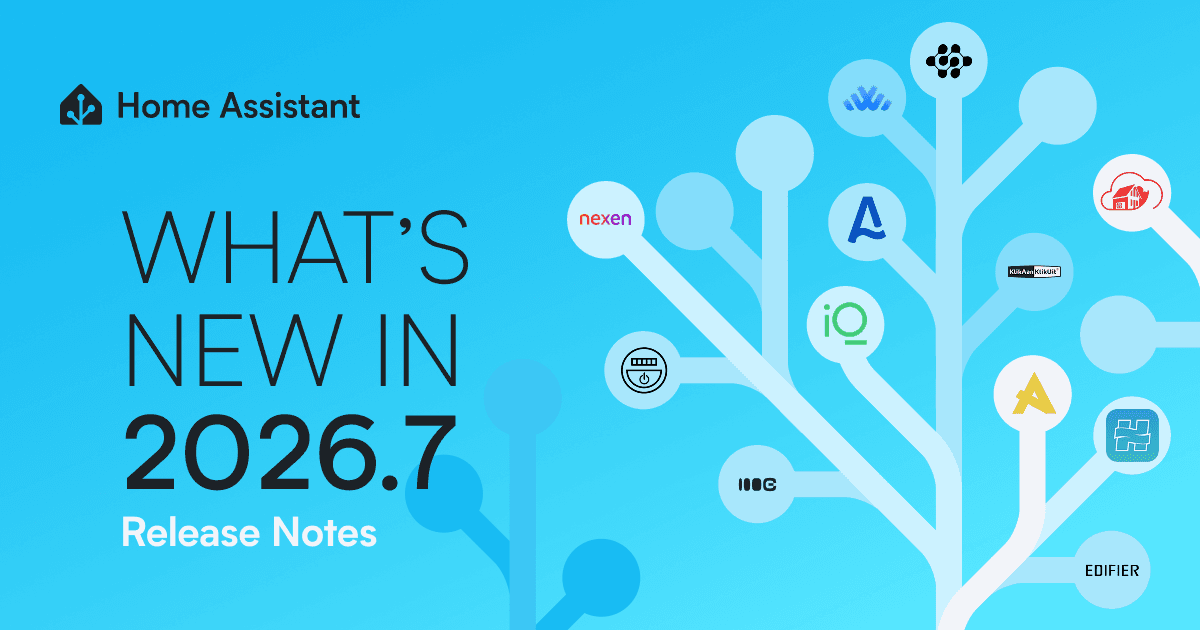
Home Assistant 2026.7 delivers automations that speak your language — the central promise of this July release. Purpose-specific triggers and conditions, introduced in Labs with Home Assistant 2025.12, are now the default for everyone. Instead of wrestling with entity states, numeric thresholds, and trigger types, you describe what you want: when the bedroom drops below 18°C, turn on the heating. Integrations can extend the automation engine with their own triggers and conditions, so a washing machine integration can offer a plain "laundry is done" moment without exposing internal state quirks.
The redesign is built around areas rather than individual devices. An automation for motion in the living room keeps working whether you have one sensor or ten, and survives hardware swaps without rewriting rules. Existing YAML and UI automations remain untouched — this is a better starting point, not a migration. Every trigger, condition, and action now has dedicated documentation with UI and YAML examples, which also gives AI-assisted builders clearer material to work from.
Beyond automations, Activity — the rebuilt logbook — presents home events as a day-grouped timeline with state-colored dots, consistent wording across the app, and cause icons showing whether a person, automation, or integration triggered each change. The Updates page adds grouped cards and an Update all button for batches of integration or app updates, while keeping core Home Assistant and deliberately skipped items separate. ZHA Zigbee management, dedicated infrared and RF panels, time-format selection, and ten new community integrations round out the release.
Read the full release notes on the Home Assistant blog.
Original Sources
Disclaimer
This is an AI-summarized article from authoritative sources. If you want your content removed, please .